About Me

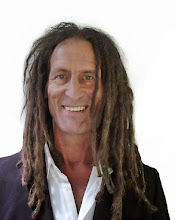
My photo
Hello, my name is Martin McKenna and I'm the author of THE BOY WHO TALKED TO DOGS, published in New York by Skyhorse and available on Audible.com. This is my memoir of when I was a boy growing up in Limerick, Ireland and ran away to live with a pack of stray dogs for 3 years. These days, I'm Australia's best-known dog communicator. For all media & blog inquiries, please don't hesitate to contact me at: martinmckennadog@hotmail.com or join me on Twitter @dreadlockdogman

Tuesday, 5 May 2015

The Dog Man is now ready to tackle the worlds of poetry and art.


The Dog Man is now ready to tackle the worlds of poetry and art.


Martin McKenna, The Dog Man, is retiring from the dog rescue world this year to pursue a career in art – and his new memoir shows why he may be an artist worth following.

Martin McKenna, known to million of Australians on radio as The Dog Man over the past 15 years, is now announcing his official retirement from the dog rescue world. To celebrate his life of helping strays in need, he’s written his memoir, The Boy Who Talked To Dogs about where his story began – as a boy growing up in Limerick, Ireland. Already the book is gaining international interest.

‘I learned about dogs in a very unusual way,’ he explains. ‘When I was 13, I was a troubled, rebellious kid. My father drank and was often violent. My teachers bullied me for being dyslexic and severely hyperactive. Some older neighborhood kids wouldn’t stop tormenting me – calling me one of ‘Hitler’s secret experiments’ because I was an identical triplet and my mother was a German immigrant. Finally, I decided I’d had enough of humans. One night I climbed out my bedroom window and ran away. I ended up living rough with six stray dogs for three years. We became a pack, though I preferred to call it a gang. These dogs became my best friends and family. They taught me so much – about the Dog World – but ultimately about myself.’

‘Living rough certainly isn’t romantic,’ he says bluntly. ‘I was often cold, wet and hungry. Sometimes it got extremely tough but I stayed on the streets because the dogs and I enjoyed such incredible freedom. In some ways it was the best time of my life – a huge adventure. However, without the dogs at my side, I would have been miserable – there’s no doubt about that.’

Now Martin is announcing his bold move into the art world as he explores a deeper, more personal side of himself. His unique artworks are a combination of poetry and art. ‘Paper installations, digital artworks, canvases – I do them all,’ he says. ‘It’s all my original poems painted on startling abstract colour. 

When asked to describe how he got interested in art, he smiles. ‘Like everything in my life, it’s pretty unusual. It started with poetry. In 2009, I still couldn’t read or write. As I show in my book – school was a nightmare for me. I had ADHD, otherwise known as severe hyperactivity and I was also dyslexic. Worse, I ended up with two real bullies of teachers who made my life complete hell, openly mocking me when I couldn’t learn anything. When I still couldn’t read and write my own name in sixth class, they started beating me and openly calling me ‘Stupid Boy’. School was such a nightmare experience, that I was adamant that I was never going to attempt reading and writing again.’

‘Then in 2009 everything changed and I had had a huge burst of creativity. All these poems started pouring into my head for the first time in my life. I have no idea why – maybe my ADHD was starting to finally slow down – but there the poems were – whirling around inside my head, impossible to ignore. My wife Lee is very cultured is constantly showing our family art and poetry, just as her mother did before her; so the seeds for creativity were already there. Maybe my subconscious just decided it was time to start inventing my own stuff because I was so bored by the famous poems Lee was reading out. I know I was supposed to be awed, but I couldn’t help yawning through a lot of them. I thought some poets desperately needed some heavy editing. Meanwhile, I was desperately trying to remember each of my own poems by memory – but there were soon too many – hundreds of them. It was very distracting so I finally agreed to bite the bullet and learn how to read and write. If I needed to write them down, then I was going to have to pick up a pen voluntarily for the first time in years.’

‘Lee is a truly gifted teacher. She’s even more stubborn than I am and wouldn’t let me give up. I can’t tell you how difficult it was for me struggling with the alphabet when I was in my late forties. I picked up reading pretty quickly but writing was a complete nightmare. My youngest daughter was six years old and gleefully out-reading and writing me. I was constantly asking her things like, “How do you do a capital G?” or “What’s that question mark thing again? Can you show me once more?” To be honest, the whole thing was a nightmare trip to hell, full of tantrums and moments of extreme frustration when pens and bits of paper went flying off the verandah – that’s where my writing table is. Some of these scraps ended up just messy, smudged scribbles – but slowly my writing and spelling improved until one day I realized – “OK – take a deep breath, I’ve got it – I’m actually writing.” This took me about sixth months of punishing hard work and pure stubborn grit. Now I have plastic bags full of these paper scraps covered in poems – and the pile just keeps growing. I still write my poems long hand, but now write them down in exercise books. I must have written over 3000 poems by now – and there’s more coming every day.’

I was so proud of my early poems, but the initial excitement soon wore off. Looking down at the small, crumpled pieces of paper, I felt they didn’t do justice to my words – so I decided to turn them into art works instead.

I wanted an art style that didn’t date and was fast to paint to suit my temperament – so I experimented with finger-painting. I covered A4 pieces of paper with bright, abstract color and once they were dry, wrote the poems on top with ink. Straight away, these small pieces of art looked spectacular because they really showed the ferocious energy I was trying to capture. Whenever I cover the interior walls of my house with these painted pieces of paper, it’s quite overwhelming – like being immersed in a universe of surging poetry and colour. I’m trying to show all the energy and imagination going on inside my mind.

I’ve had some of these A4 pieces of paper blown up into huge digital canvases, which look amazing – especially after I paint over the lettering again with thick gold paint. This really makes the poems jump out at you. My favorite is Socrates Sugar-Crashing.

However, now I prefer to paint my poems in acrylic on large canvases, using my whole hand to move the paints around freely. Bold colors on this large scale makes these canvases extremely powerful. The gold paint of the lettering painted over the top shimmers like Byzantine pieces. I haven’t had time to paint many canvases because I’ve been so busy writing and publicizing my memoir in America, Ireland, the UK and now Brazil, but I’ve sold all of the canvases I’ve made so far. All except the first painting I ever made – which I’ve decided to keep. I’ll never forget creating it – I felt such an incredibly potent feeling! In future, I plan to inscribe my poems on large, thin slabs of marble and hang them on walls. I’ll paint into the inscribed lettering with craggy, thick gold paint. These art works will allow my poems to be read for hundreds if not thousands of years.

I’m so excited about the future and can’t believe how much creativity is exploding out of me. I’m constantly coming up with new colour ideas and poetry obsesses me. It’s a big claim to make after only six years of creating art, but I want to be seen as the greatest poet-artist of the 21st century. There aren’t many artists painting poems on canvases, but I feel mine are the boldest and most eye-catching at the moment. My poems are short, sharp and fresh. Perhaps because I wasn’t trained in traditional poetry forms and follow my own instincts, this makes me different from most other poets out there.

Who’s my competition? The most famous poet-artist in the world at the moment is Rene Ricard in New York who was part of Andy Warhol’s infamous inner circle of artists who frequented the 54 Club. I wasn’t aware of his existence until I read about him last year in an old Vanity Fair magazine. I actually got my original idea for painting poems on art works from my wife Lee. She painted scenes from her original poems for her HSC when she was in high school. I remember looking through her big book of illustrated poems, which were about 10 bicycle rides she made to Barrenjoey Lighthouse in Palm Beach, from her home in Avalon and thought – “Wow. Poetry is powerful on art. Now that really works.” 

I’m already part of an exciting gallery in Nimbin called The Brush Off Gallery. Rosyln Parry is the artist-owner and had a fascinating childhood growing up in Papua New Guinea. She’s exhibited at many prestigious art galleries in Sydney over the past 30 years.

I felt right at home the moment I stepped inside her gallery. It’s like something out of the back streets of Paris in the early 20th century. It’s tiny and cramped; every wall is crammed with paintings, while others canvases are stacked against walls. The floors are covered in old dripped paint, while a street cat struts around, overseeing the place. Every day a surprising amount of curious, cultured young European, Asian and American tourists wander through, who are delighted, saying they haven’t been in an old-fashioned gallery like this for years. The poetry lovers amongst them see my art and immediately stop and stare. They haven’t seen anything like it and quickly start reading my poems to see if they’re any good – and so far, they’re impressed. Most are university students and are passionate about art and poetry, so conversations and debates can get very lively. It’s about as far away from your usual sterile city gallery as you can get and I love it. I think it’ll be a vitally important gallery in the stunning Nimbin area – especially in future decades.

Although I’m sad to leave behind the public side of helping rescue dogs after twenty years – I know I’m doing the right thing. I feel like I’ve finally repaid my debt of thanks to those amazing six stray dogs that helped me survive my time living rough around Garryowen in Limerick. My gut is telling me to follow this new creative side of me right now and take it as far as I can – and to do that properly, I need to throw myself headfirst into my poetry and art.

Am I crazy? I don’t think so. When I first started in the dog industry over twenty years ago, a lot of people laughed at me – but I just got on with it. Now I’m the best-known dog communicator in Australia and have been a guest on tv and many cultural radio shows such as Philip Adams on Late Night Live, Fran Kelly’s National Breakfast show and Margaret Throsby’s Classic FM Midday show.

Then there were the people who laughed when I said I was going to write a book. I couldn’t read and write much more than my own name in 2009 – yet here I am today with an international memoir and represented by the Writers House in New York, one of the most prestigious literary agencies in the world. I also wrote two books on dog language and culture here in Australia, one of which became an instant bestseller.

Now I want to be a great poet-artist – and I’ve already come up with a unique style and written thousands of poems that are ready to paint. History will tell if I’m good enough to be remembered – and that’s the only critic I’m bothering to listening to. That and my own gut instinct, which hasn’t let me down so far.

To be honest, I feel utterly fearless, like a warrior-bard who’s getting ready for battle. I sense the poetry and art worlds are ready for a bit of a shake up and believe my work has what it takes to have a big impact on both these quite conservative worlds. Whatever happens, I know I’ll have my family and a pack of staunch dogs watching my back, urging me on, pushing to discover how far I can go.

My memoir, The Boy Who Talked To Dogs will give you a great insight into the sort of person I am. Even when I was a rebellious boy of 13, I always chose to live life on the edge – so I’m certainly not going to walk away from taking a risk now. I’m just at the start of the second half of my life and I’m raring to get on with it. If there’s one thing the stray dogs of Garryowen taught me – it’s to look tomorrow straight in the eye with courage.


What a pack of stray dogs taught me about life.


What a pack of stray dogs taught me about life.
Martin McKenna, The Dog Man, finally writes his memoir about his rebellious boyhood as an Irish street kid who lived with a pack of stray dogs.


Australia’s best-known dog communicator, Martin McKenna is known to millions of radio listeners as ‘the Irish man who talks about dogs’. For the past 20 years, he’s been helping audiences understand dogs, but now he’s saying it’s time to say a grateful farewell to the dog rescue world. To celebrate his years of helping dogs, he’s decided it’s time to reveal the full story of how he first learned about the culture of canines. It’s quite a strange tale. As a runaway boy in Ireland, he lived with a pack of six stray dogs for three years. These street dogs not only taught him their unique language and culture – they also became his family and teachers.

‘This is the full story at last,’ he says about his new memoir, The Boy Who Talked To Dogs. It’s funny and very real – often emotional – but never boring. I promise you that. Dogs are amazing creatures and if you throw a rebellious, hyperactive 13 year old boy into a pack of six strays – you get one hell of a lot of energy and adventure!’

Martin also shows what life was like before he ran away. He was a troubled, rebellious young boy growing up on a suburban housing estate in Garryowen in Limerick, Ireland. He always felt like an outsider and never stopped attracting trouble because of his ADHD, which is a condition of severe hyperactivity. He quickly became sick of being mocked and bullied by the bullies in his life. This included a charming father who drank heavily and could transform without warning into a violent stranger. There were also two cruel teachers at his school who openly mocked and beat him, as well as some older children in the neighborhood who made his life difficult. ‘They didn’t make life,’ says Martin wryly. ‘They were constantly tormenting me for being one of “Hitler’s secret experiments” because Andrew, John and I were identical triplets and our darling mother Sigrid was German. Once we had a swastika painted on our front wall and our poor mother was devastated. Nobody hated the Nazis as much as my mother.’

One night Martin decided he’d had enough of complicated humans and their cruelty, so he climbed out his bedroom window and ran away. He was 13 and it was 1975. He hooked up with six local strays and they ended up living rough for the next three years. They roamed around the Garryowen countryside, sleeping in hay barns; raiding farmhouses during the day and local housing estates at night in their constant search for food.

After having an RTE Irish radio documentary made about his life, Martin wrote down his story and sent it off to various agents around the world. ‘I had eleven agents interested within three weeks which was exhilarating. I signed with prestigious New York literary agency, the Writers House and my wonderful agent Daniel Lazar sold it to New York publisher, Skyhorse.’ Now his memoir is published in North America, Canada, Brazil and here in Australia.

‘It’s been very exciting,’ he says. ‘The first run of hardcovers in Australia sold out quickly and now it’s coming out in paperback. It’s also just become available on Audible.com. I think people are really going to love the book. It’s a powerful story that’s very inspiring. I think there are a lot of people who found genuine help from a dog when they were a kid. Whether it was your own pet or a strange dog down the park or a just familiar dog down the road – dogs are amazing at putting a smile back on your face again. They’re very gifted at healing your soul after it’s been dented around a bit by a human bully.’

Martin says the six stray dogs who adopted him, also became his mentors and changed him profoundly. ‘These dogs taught me so many things beside their language and customs. For instance, they taught me some powerful life lessons. They transformed me from being a wild, mixed-up, uncontrollable kid into someone who could relate to humans again. Isn’t it ironic? It took a pack of stray dogs to teach me how to be a happy human? From them, I learned how to calm down my ADHD. By following their example, I learned about loyalty, respect and courage. I got used to having a disciplined routine. I learned the importance of perseverance and staying optimistic so I didn’t waste valuable energy. From watching the example of my gang of dogs, I learned how to bounce back from the really bad days. They taught me to walk off stress or simply curl up and sleep it off so I never suffered depression.’

‘Ultimately, I think these six dogs taught me how to respect and like myself. That was the big lesson – and I’ll always be grateful to them. It meant that when I returned to the human world again three years later – I was emotionally stronger. I’d grown into a much more confidant teenager. I could now stand up for myself, make friends and trust people again. These strays taught me the skills I needed so badly to survive when I returned to the rough and tumble of the human world.’

He’s adamant that without these six dogs, he’d be dead now. ‘Without a doubt, dogs saved my life. They stopped me from becoming a drug addict, committing suicide or landing myself in a boy’s home or prison later in life.’

When he finally left Garryowen in his twenties in search of work, he was so grateful, he knew he wanted to repay other homeless dogs in some way. This is the main reason why he’s devoted the last 20 years of his life to the dog rescue industry – to help as many homeless dogs as he could from death row.

‘I’ve helped as many dogs as I possibly could. Of course, sometimes it gets heartbreaking because you can’t possibly save them all. It’s particularly traumatizing when you’re like me and can understand every word a dog is saying. They’re yelling out non-stop how scared and confused they are and I have to try and block the poor things out – sometimes leaving them to their deaths which nearly destroys me. To be honest, I have to stay away from the big shelters and council pounds as much as I can because my nerves are always shattered by the experience. Every time I go to one, I see such incredible personalities amongst the dogs – so many wise, clever, sweet and kind characters – that I have to stop myself from running over and breaking down all the wire-mesh gates, letting them all out and simply running off with them, leading them somewhere safe!’

‘I have such respect for dog rescue volunteers – especially those at the small local organisations. They do it for love, not a wage – and they’re so tenacious about saving as many dogs as they can. I always encourage people to support their small local rescue group. Every single gesture of kindness or generosity makes such a difference. Blankets, collars, cash, dog food – they’re always straining to get enough basic resources so they can save more dogs lives.’

He wishes more people would consider adopting a rescue dog. ‘If you get to know the fascinating sacred laws of the Dog World – then you’ll understand how easy it is to have a beautifully behaved dog. If a dog’s being silly or badly behaved, it’s simply letting you know you’re breaking the sacred laws they take so seriously. To fix the problem, you only need to learn these very simple but essential dog laws – there are about 25 of them. It also makes a huge difference if you learn a little dog language.

‘Dogs are fascinated by humans who learn dog language – it’s just so unusual and makes them extremely curious. Learn their sacred laws and communicate with them in their own language – that’s the secret to owning a lovely dog. Luckily – it’s a very easy language to learn and fun. Communication, not domination – that’s my motto for owning a lovely, hassle-free dog.’

Martin has always remained a bit of a rebel within the usually conservative dog world. He refused to tame his hair and still has a head full of dreadlocks. His bottom two teeth are missing and he refuses to get them fixed. 


‘I’ve left them unfixed so I can point to them and remind people how many unwanted dogs are still homeless – as well as kids and adults. It’s a sad state of affairs and to be honest – disgraceful. It’s such a fixable problem. I think a civilization should be judged on how it treats its most vulnerable members. People in the future will look back on us and judge us for how we’ve treated our homeless – and I believe we’ll be judged as barbaric for our lack of compassion.’

He’s enjoyed a growing popularity over the years for his outspoken views and innovative ideas about dogs. He’s been a guest on The Project, The Today Show, Kerri Ann Kennerley and featured on Irish RTE Radio One Documentaries and ABC Australian Story. He’s also been on over 450 radio shows during the past 15 years, including ABC Late Night Live with Philip Adams, Radio National Breakfast with Fran Kelly, Classic FM middays with Margaret Throsby, Triple J, Triple M, 2UE and many statewide and regional ABC and commercial shows.

Martin is sad to be leaving behind the world of rescuing dogs as a professional but says he’ll be happy to be able to spend more time with his own pack of six adopted dogs on his small farm in the hills above Nimbin. ‘I love walking them along the quiet country lanes around here. It reminds me so much of when I was a boy. I definitely like space around me.’


‘As for the service I’ve given dogs,’ he says. ‘I’m leaving the industry with my head held high,’ he says. ‘I’ve given away all my information for free on radio. I have a website full of free cartoon sheets solving common dog problems. I helped rescue as many dogs as I could. I charging owners nothing if they couldn’t afford it. I’ve driven all over the countryside rescuing dogs from death row. I’ve written three books on dog language and the sacred laws of the Dog World.’

When asked about what he thinks he’ll be best remembered for, he says, ‘I believe I’m leaving behind a legacy that encourages people to communicate with their dogs a lot more – rather than simply ordering them about. I’ve introduced the idea that there’s an International Language of Dogs and that dogs are always trying to converse with us – we simply haven’t been picking up a lot of their signals. Once you start tuning into your dog, you’ll be amazed about how much your dog’s been trying to tell you! I’d love for Dog Language to one day be recognized as an official world language. Most of all, I believe I’ve helped people think like a dog. This is the first step to solving any dog problem.’ I’ve lost count of the number of times I’ve jumped down on the ground and acted like a dog so audiences can see what I mean. I’ll do almost anything to save a dog’s life.’ 

Now Martin is determined to spend the second half of his life pursuing his creative side. Since 2009 he’s been writing poetry and painting his short, sharp poems on large, abstract canvases. He’s represented by The Brush Off Gallery in Nimbin; a small old fashioned, Parisian-like gallery in the internationally renowned rainforest village in the far north of NSW.

‘One day I want to be considered one of the greatest poet-artists of the 21st century, he states with quiet confidence. ‘History will tell if I’ve succeeded – but I’m unafraid. I’ve already progressed from being illiterate to having my memoir published in New York – so now I’m ready to tackle my passion for art and poetry head-on. I know it’ll be a hard road – but I’m raring to go and feel like I’m exploding every day with creativity and energy. If you’d like to follow the rest of my journey, you can follow me on Twitter at: @dreadlockdogman.

‘However, if you’d like to see how my journey began, I urge you to get hold of a copy of The Boy Who Talked To Dogs. It’s a really amazing story – super-fast, energetic and hilarious. There are certainly some emotional moments but I’m not a dreary person – hell! Just look at me! So I always bounce back, more defiant than ever. I was a real rebel of a kid and this is my fascinating story of the year before I ran away and the three years after I ran away and lived with my little gang of six strays. I was living rough from when I was thirteen to sixteen, 1975 to 1978. It was a huge adventure with unimaginable freedom. The boy on the front cover is Fintan my son, who’s the same age I was when I lived rough. The dog is Sean is one of our rescue dogs. I’m so proud of this book – it captures my rebellious, adventurous boyhood perfectly. I can’t wait to share it with you.’   


Has this man written the next big Irish classic book?


Has this man written the next big Irish classic book? 

Written by the Dog Man, otherwise known as Martin McKenna, this Irish man lives in Nimbin, the rainforest village in northern NSW. Millions of Australians have heard him dispensing dog advice on ABC Radio. Now word about his unusual childhood with a pack of stray dogs is starting to spread from New York to Brazil.


Just as fascinating as his childhood as a runaway who lived rough on the streets with six dogs for three years, is the equally intriguing story of how Martin McKenna came to write the memoir that many in the publishing industry are tipping to be the next big Irish classic.

In brief: Martin ran away from school when he was 13 and illiterate. He was so dyslexic that he could barely read and write his own name. One bully teacher even nicknamed him ‘Stupid Boy’, constantly mocking and beating him for not learning until Martin swore he’d never pick up a pen again.

He only learned to read and write in 2009 when he desperately wanted to write his poems down so he wouldn’t forget them. His wife Lee taught him, using an exercise book and a pen. It was very difficult and frustrating but he learned using his own poetry. Due to his popularity on radio – especially ABC programs around the country – he had a ghost writer write his first book, The Dog Man. Then he wrote two books on dog language in his natural conversational style, What’s Your Dog Telling You?, which became a runaway bestseller in 2011,
and What’s Your Dog Teaching You? (ABC/HarperCollins)

After featuring in an RTE Irish radio documentary, he decided it was time to write his memoir and finally share the full story about his unusual childhood. He wrote three chapters and sent it off to various literary agents around the world. Within three weeks, 11 agents were interested. He signed with Daniel Lazar of the prestigious literary agency, the Writers House in New York. The unfinished manuscript was bought by Skyhorse publishers, also in New York and he finished it. The book was endorsed by Irish-American literary giant, Malachy McCourt. Then Audible.com quickly bought the rights and made an audio version of the book, with an American actor reading it. It’s now published in North America, Canada, Australia and Brazil.

‘Brazil being interested in the book is mind-blowing,’ says Martin. ‘It’s an incredible honor for me. They’re interested in me being a street kid because as a nation, they’re now working hard to solve the problems of severe poverty in the favelas around the cities of Brazil. Homeless, rebellious boys of 13 to 16 are particularly at risk of being absorbed into drug gangs, so Brazilians are fascinated by my inspiring story. I’m an example of how a street kid can get turned around during his lifetime and actually become a success.’
‘It’s been very exciting,’ he says. ‘The first run of hardcovers in Australia sold out quickly and now it’s coming out in paperback. It’s also just become available on Audible.com. I think people are really going to love the book. It’s a powerful story that’s very inspiring. I think there are a lot of people who found genuine help from a dog when they were a kid. Whether it was your own pet or a strange dog down the park or a just familiar dog down the road – dogs are amazing at putting a smile back on your face again. They’re very gifted at healing your soul after it’s been dented around a bit by a human bully.’
 
What does he think of the growing success of his memoir? ‘I’m not sure,’ he says, bemused. ‘A bit shocked I think. I love this book and am extremely proud of it. My beloved Mammy, Sigrid and dad, Mick, sadly both deceased, would be very happy with the way I’ve written the story. It gives honor to my family and explains how the little known condition of ADHD was to blame for me being so uncontrollable. However, this book also captures the adventure and rebellious spirit of my childhood perfectly – and I think a lot of people are going to find peace in their own past by reading it. I constantly look for the hilarious side of situations, so this book is very optimistic and mischievous. It will remind you of how funny life seems when you’re a kid – everything’s so new and strange - and fast! Do you remember how you used to run everywhere?’

‘It was a wonderful honor having literary giant Malachy McCourt endorse my book. You can see it on the front cover of the book. It’s a bit surreal seeing my book that started as a pile of messily scribbled pages become this amazing looking book with Malachy’s name on the cover. I never thought I’d ever be able to write my own name properly when I was a kid, let alone write a book that got published in America. I’ve just heard the audio version with an actor reading it on Audible.com and it sounds fantastic. Very fast and exciting.’  

Now Martin is retiring from the dog rescue industry to pursue his more creative side as an artist-poet, painting his poems on large, abstract canvases and is thrilled at the prospect. ‘It’s a big claim but I want to be known as the greatest artist-poet of the 21st century. I’m working hard and fearlessly every day towards that goal. Only history will tell if I’ve succeeded.’